Westwood Shores MUD, Texas, Launches Lead Service Line Identification Project

Municipal Utility District Selects Electro Scan Inc. Using Its SWORDFISH Electrical Resistance Testing Technology to Assess Homeowner’s Water Service Lines
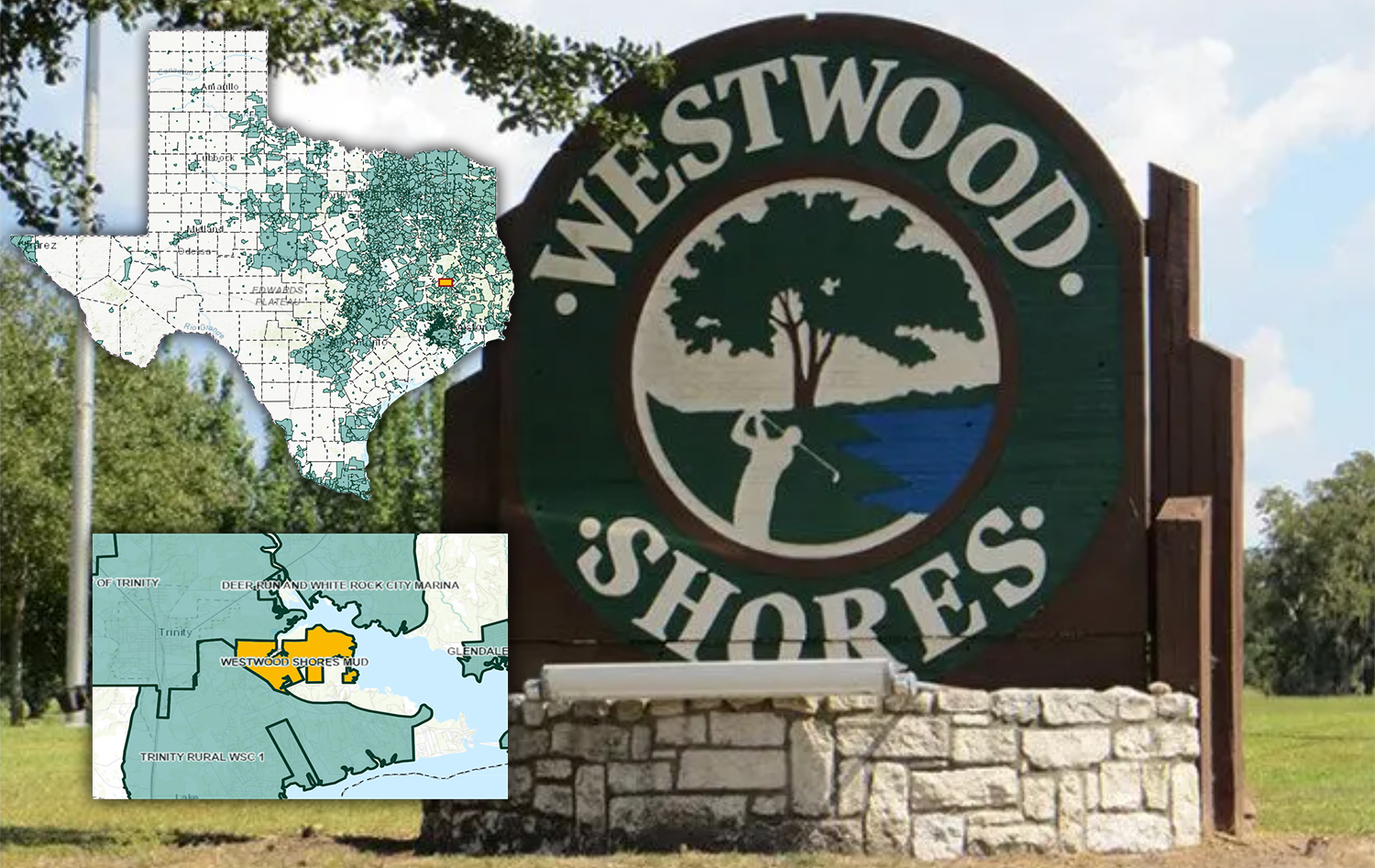
Westwood Shores Municipal Utility District is located in Trinity County, Texas, serving a population of over 2,000 people and 804 water service connections.

Westwood Shores Municipal Utility District is located in Trinity County, Texas, serving a population of over 2,000 people and 804 water service connections.

This project reflects Westwood Shores MUD’s commitment to transparency, regulatory compliance, and the continued protection of public health.”— District RepresentativeTRINITY, TX, UNITED STATES, February 11, 2026 /EINPresswire.com/ — Westwood Shores Municipal Utility District (MUD) announced today the launch of a comprehensive Lead Service Line Identification and Inspection Project, an important step in ensuring long-term drinking water safety and compliance with state and federal requirements.

Sacramento, Calif-based Electro Scan Inc. has been selected as the sole source services vendor to complete the project.

Beginning March 2, 2026, the District will inspect 386 homes throughout Westwood Shores using non-invasive electrical resistance testing technology (SWORDFISH) to identify the material composition of water service lines on both the public and private sides of each water meter. The project is expected to take approximately eight (8) weeks to complete.

Water service line identification project in response to requirements of the Lead and Copper Rule Improvements (LCRI).

Water service line identification project in response to requirements of the Lead and Copper Rule Improvements (LCRI).

Westwood Shores MUD was originally developed in the early 1970s, a period during which lead and galvanized materials were still commonly used in water service lines across the United States. This proactive inspection effort will allow the District to accurately confirm pipe materials without excavation and update its service line inventory in accordance with evolving regulatory standards.

The project is being managed by Civil Grade Engineers, LLC of Houston, serving as overall project manager. Leadership for the effort includes Rico Rodriguez, President of Civil Grade Engineering, and Thalia Salas, Project Manager. Field operations and technical execution are being led by Shandon Baker, Field Service Manager, and Matt Campos, Vice President of Pressurized Pipes, under a formal project management agreement .

What Residents Can Expect
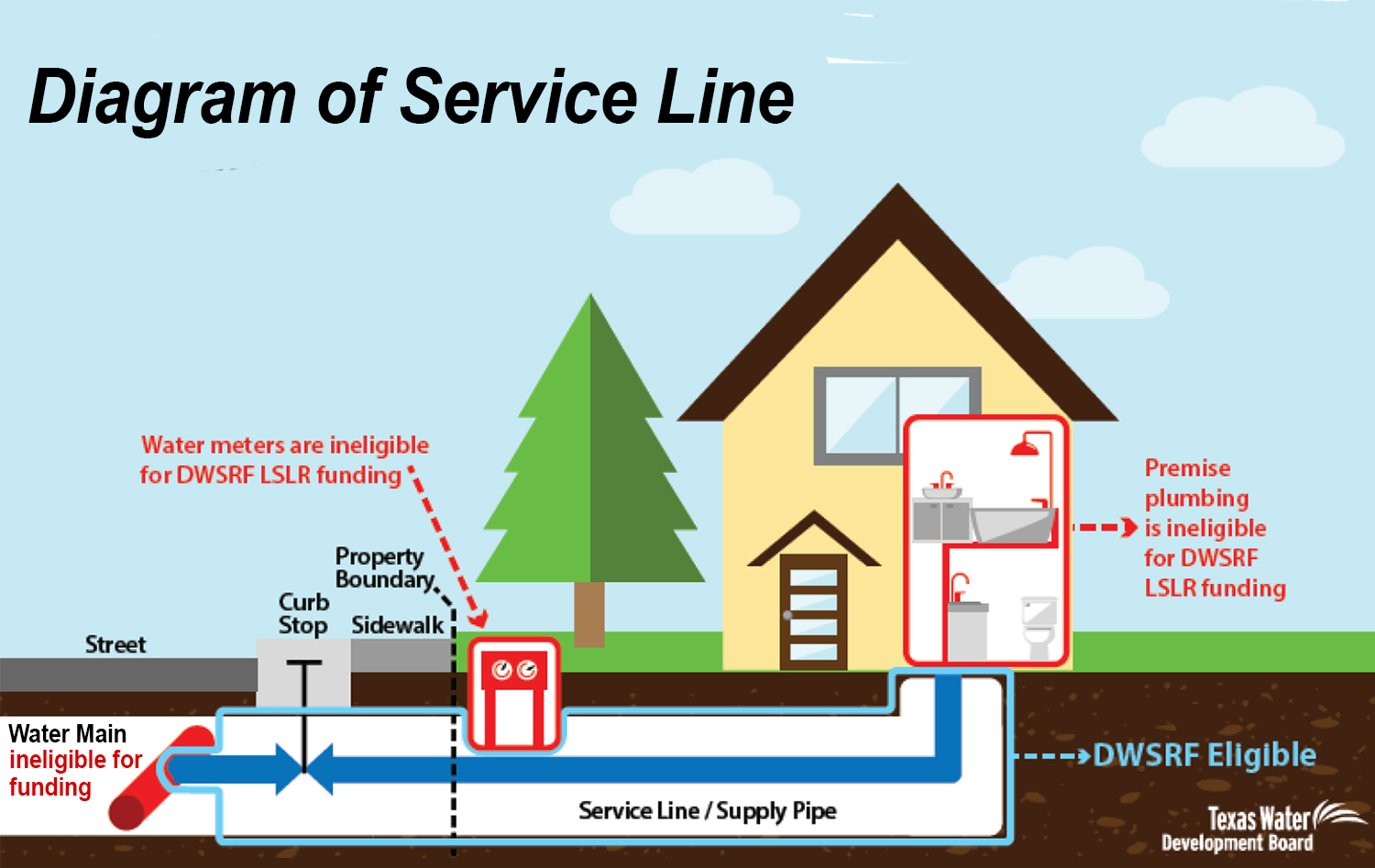
Typical water service line connection, including Drinking Water State Revolving Fund (DWSRF) eligible funding components.

Typical water service line connection, including Drinking Water State Revolving Fund (DWSRF) eligible funding components.

• No excavation and no entry into homes
• Inspections performed entirely outside the residence
• Temporary water shutoff during inspection, followed by flushing in accordance with AWWA and TCEQ protocols
• Door hanger notifications delivered:
• Approximately two weeks prior to inspection
• A second notice one day before scheduled work
• Residents are not required to take any action for the inspection to occur

Each inspection surveys both the public side (from the water main to the meter) and the private side (from the meter toward the home) where applicable. Any service line identified as containing lead will be promptly reported to the District, and appropriate follow-up steps will be taken.

Statewide Context
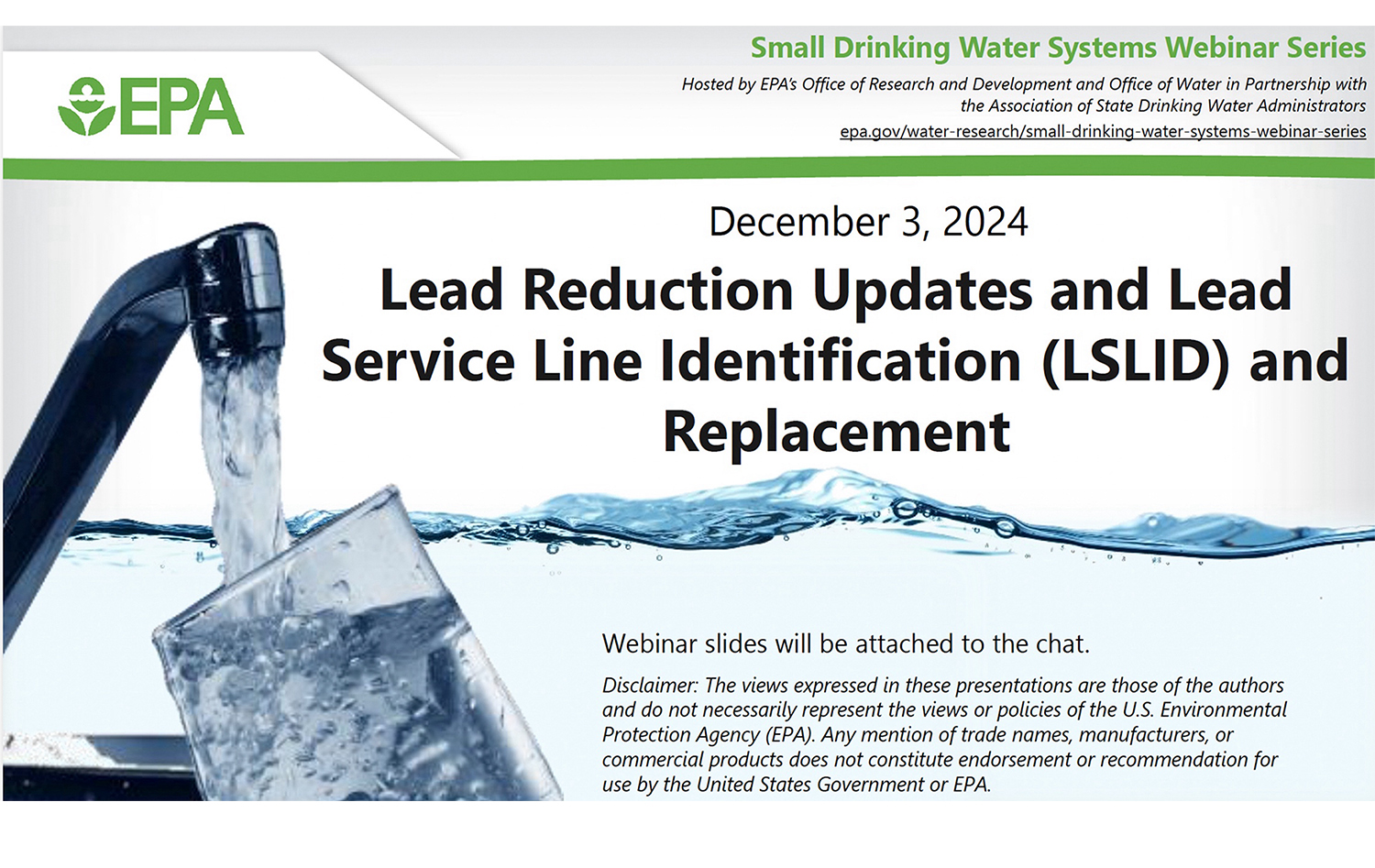
In December 2024, the USEAP recognized 'electrical resistance testing' as the only commercially available technology able to identified buried lead pipe, without digging or excavation.

In December 2024, the USEAP recognized ‘electrical resistance testing’ as the only commercially available technology able to identified buried lead pipe, without digging or excavation

.The initiative aligns with the State of Texas’ Lead and Copper Program, administered by the Texas Commission on Environmental Quality (TCEQ).

TCEQ oversees 5,641 public water systems, encompassing more than 9.3 million service connections and serving a population of approximately 32.9 million Texans. Accurate service line inventories are a critical component of statewide compliance and public health protection.

Commitment to Transparency and Safety

“This project reflects Westwood Shores MUD’s commitment to transparency, regulatory compliance, and the continued protection of public health,” said District representatives. “By using modern, non-destructive inspection technology, the District can gather accurate information while minimizing disruption to residents.”

Additional project information, including inspection schedules and contact details, will be made available through Westwood Shores MUD communications channels.

About Electro Scan Inc.
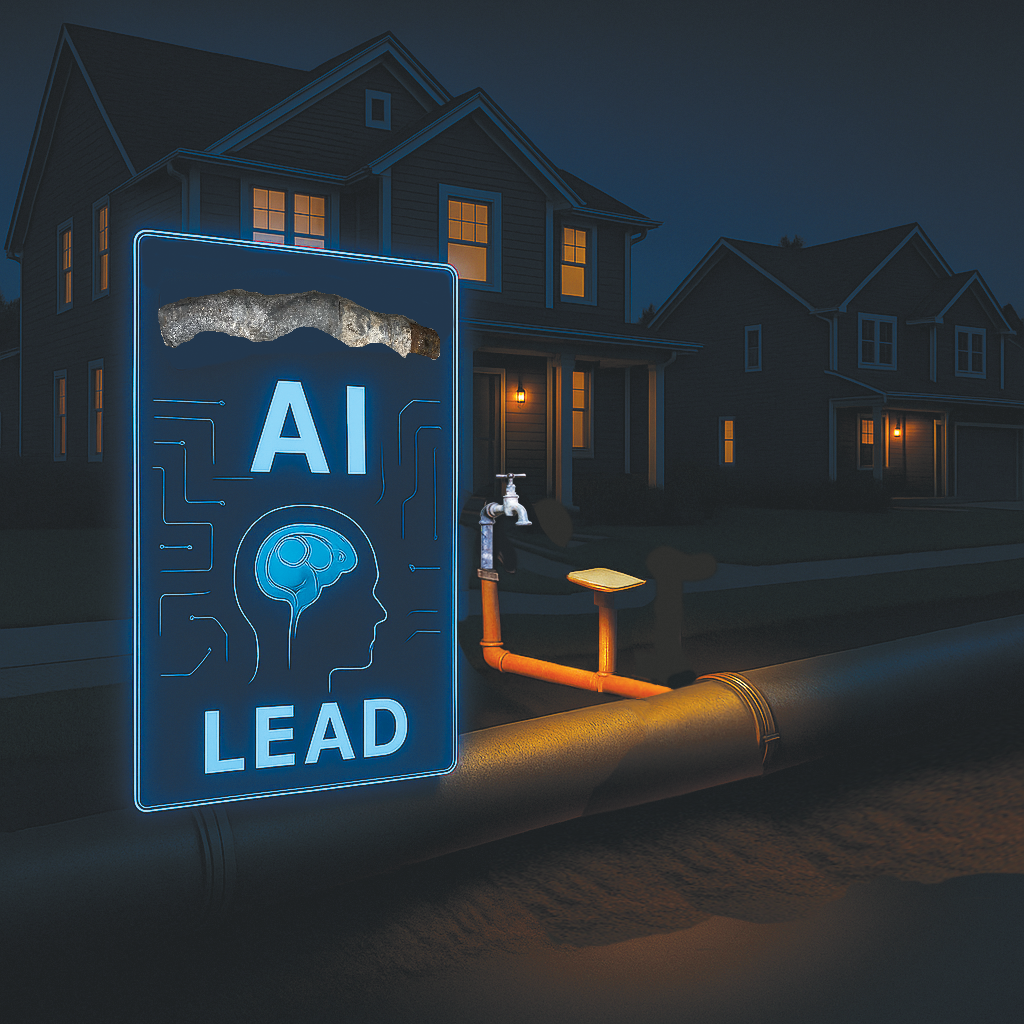
SWORDFISH represents the first machine-intelligent probe that automatically detects Copper, Galvanized, Plastic, and Lead pipes, without digging.

SWORDFISH represents the first machine-intelligent probe that automatically detects Copper, Galvanized, Plastic, and Lead pipes, without digging.

Electro Scan Inc. develops and manufactures advanced inspection and diagnostic technologies for the water and wastewater industry. Its SWORDFISH platform uses machine-intelligent, low voltage electrical resistance technology to accurately identify and verify service line materials, enabling utilities to build defensible lead inventories and replacement plans in compliance

with federal mandates. Electro Scan’s technologies are used by water utilities, home inspectors, and real estate brokers, worldwide, to enhance water system integrity and public health.

HASHTAGS
#acousticsensors #ai #amp8 #artificialintelligence #asce #askchuck #awwa #awwam77 #britishwater #californiadrought #chuckhansen #cipp #conditionassessment #conductivity #deeplearning #drainage #drought #dwi #electromagnetic #electroscan #epa #esg #esginvesting #fell #gettheleadout #gpm #homebuyer #homeinspection #homeseller #infrastructure #innovyze #inspection #iot #internachi #leak #leadpipe #leadetection #leaks #leakdetection #leakdetectionoftheyear2021 #lps #m77 #machinelearning #megadrought #ml #nassco #pacp #pcat #piperepair #pressuretransient #realtor #resilient #resiliency #satellite #sewer #sewerai #sustainability #swan #trenchless #usepa #utilities #wastewater #water #waterai #wsaa #worldbank #wsaa
Janine Mullinix
Electro Scan Inc.
+1 916-779-0660
email us here
Visit us on social media:
LinkedIn
Instagram
Facebook
YouTube


Electro Scan and Core & Main Announce Sales Agreement to Expand SWORDFISH Lead Service Line Detection Technology

ST. LOUIS, MO, UNITED STATES, December 2, 2025 /EINPresswire.com/ — Electro Scan Inc., the global leader in machine-intelligent lead pipe detection, today announced a new exclusive sales and marketing agreement with Core & Main LP. Through its newly acquired damage prevention branches —comprising Green Equipment Company (Fort Worth, TX) and Eastcom Associates, Inc. (Branchburg, NJ)—Core & Main LP will distribute Electro Scan’s SWORDFISH solutions to municipal water utilities, contractors, home inspection, and real estate professionals across a 26-state region.

This partnership significantly expands access to the only commercially available technology recognized by the U.S. Environmental Protection Agency for accurately locating buried lead service lines.

Helping Utilities Accelerate LCRR & LCRI Compliance

Under the agreement, Core & Main will market and support Electro Scan’s SWORDFISH Special Edition (SE) and SWORDFISH LeadTrace (LT) systems—two solutions designed to help utilities rapidly build accurate lead service line inventories and prioritize replacement programs.

Product Highlights

• SWORDFISH SE (Special Edition)
Lightweight, autonomous, and built for rapid in-field identification of service line materials, leak detection, and real-time digital reporting.

• SWORDFISH LeadTrace (LT)
A flexible, advanced probe capable of navigating more complex or longer buried lines for non-invasive identification of copper, galvanized, plastic, or lead service lines.

• Proven Results
More than 15,000 home inspections have been completed since launch in 2023, establishing SWORDFISH as a field-proven solution for fast, accurate service line assessments.

Leadership Commentary

“We’re thrilled to partner with Core & Main’s two branches focused on damage prevention,” said Mike App, Executive Vice President of Electro Scan Inc. “Their nationwide reach and deep municipal relationships make SWORDFISH SE and LeadTrace available exactly where utilities need them most. Together, we’re enabling faster, data-driven decisions that support safer drinking water and full LCRR/LCRI compliance.”

“Adding Electro Scan’s patented technologies to our portfolio strengthens our commitment to protecting underground assets and enhancing public safety,” said Gary Schafer, Core & Main’s Director, Damage Prevention. “Utilities now have direct access to the most accurate, field-validated solution for locating lead service lines—without digging.”

Growing Regulatory Pressure Increases Demand

Recent Electro Scan research presented at the AWWA Water Quality Technology Conference confirms that lead particles routinely adhere to copper and plastic pipes through biofilms and mineral deposits—making visual inspections unreliable. EPA’s Lead and Copper Rule Revisions require galvanized service lines downstream of past lead pipes to be classified as Galvanized Requiring Replacement, further increasing the need for accurate material verification.

Home inspectors, real estate professionals, and contractors are increasingly recommending service line verification during property transactions, given widespread inventory gaps and the high number of unknown or misidentified pipe materials.

Electro Scan Inc. is also a Vendor Member of InterNACHI®, the world’s leading association for home inspectors.

About Electro Scan Inc.

Electro Scan Inc. is a global leader in machine-intelligent leak detection and buried pipe material assessment, providing patented solutions that deliver non-invasive, highly accurate data for water utilities, contractors, and property owners.

About Core & Main

Core & Main is a leading provider of infrastructure solutions for water, wastewater, storm drainage, and fire protection in North America, with one of the industry’s most extensive distribution networks and deep expertise in underground utility protection. It has recently invested in companies specifically involved with selling damage prevention solutions, these branches , Green Equipment Company (TX) and Eastcom Associates, Inc. (NJ), offer specialized solutions and equipment for utility locating, buried asset protection, and advanced water infrastructure inspection technologies.

Janine Mullinix
Electro Scan Inc.
+1 916-779-0660
email us here
Visit us on social media:
LinkedIn
Instagram
Facebook
YouTube
X

SWORDFISH Roadshow 2025

Electro Scan and Entech Engineering have partnered to bring the Service Line Inventory (SLI) Show on the road! Our SWORDFISH Roadshow will be stopping at select cities across PA. You’re invited to join us as we present and demo two powerful tools to help you make serious progress on your SLI.

More Details

UKSTT Detection, Location & Inspection Award Finalists 2025

Electro Scan UK Ltd, in collaboration with Clancy and Southern Water, used its patented Focused Electrode Leak Location (FELL) technology to deliver post-CIPP quality assurance across multiple wastewater sites. Traditional CCTV inspections often failed to detect defects behind liners or at joints. Electro Scan’s ES-400 system automatically identified and quantified defects in litres per second, revealing undetected leaks and verifying rehabilitation effectiveness. The project provided Southern Water with objective, repeatable data to validate lining performance, reduce infiltration risk, and support AMP7/8 outcomes—marking a step-change in QA/QC standards for sewer rehabilitation.


SOURCE: https://www.ukstt.org.uk/detection-location-inspection-award-finalists-2025/

Electro Scan Inc. Announces Artificial Intelligence (AI) Breakthrough for Locating Leaks in Drinking Water Pipes

New AI Particle Tracing Achieves 100% Confirmation of Leak Locations, Eliminating Dry Holes Dug Using Inaccurate Readings from Acoustic-Based Solutions

The trick is knowing where to STOP the camera. By already detecting the leak using Electro Scan’s FELL, field operators know where to STOP the camera while still inside the pipe.”

— Mike App, Executive Vice President, Electro Scan Inc.

HOUSTON, TX, UNITED STATES, March 20, 2025 /EINPresswire.com/ — Electro Scan Inc. today announced the release of a breakthrough artificial intelligence (AI) tool that automatically confirms leaks from inside water of pipes. Disrupting the global leak detection market, the new AI tool tracks water particles exiting from a pipe delivering a 100% confirmation of leak locations, including clock position and severity of leaks measured in gallons per minute or liters per second.

Working in combination with the company’s industry leading focused electrode leak location (FELL) solutions, operators first identify leak locations using FELL. Then pause or halt its high resolution underwater camera to track the movement of individual water particles showing where water exits the pipe through a confirmed leak.

Earlier this week Electro Scan Inc. was named #2 of the 10 Top Plumbing Companies in the USA Using Cutting-Edge Leak Detection [2025 Guide]. The list cited Electro Scan’s competitive advantage using electrical resistance testing or FELL to locate leaks.

According to the American Society of Civil Engineers, the U.S. loses about 6 billion gallons of treated water each day because of leaky pipes and aging infrastructure.

In 2024 the U.S. EPA named electrical resistance testing, used by the company’s SWORDFISH lead detection product, as the only commercially available innovative technology able to locate buried lead pipes, without digging.

Electro Scan’s new AI tracing TOOL (now deployed in all pressurized water main and transmission leak detection projects), makes the use of acoustic-based sensors that listen for leaks, obsolete.

“We are delighted to bring this game-changing product to market,” stated Mike App, Executive Vice President, Electro Scan Inc. “Television cameras were rarely, if ever, used in pressurized water pipes because leaks typically go out of a pipe and a moving camera causes too much disturbance.”

“The trick is knowing where to STOP the camera,” continues App. “By already detecting the leak using Electro Scan’s FELL, field operators know where to STOP the camera while still inside the pipe. Video segments, when stopped, can retrace water particles and confirm leak locations.”

The tool is a Software as a Service (SaaS) product integrated with the company’s Amazon Web Service (AWS) cloud suite.

Traditionally, water utilities have relied on legacy-based acoustic sensors to attempt to locate anomalies that must be further investigated.

But, acoustic sensors, including data loggers and correlators that listen for leaks have many long-standing operational issues, including the inability to:
• Identify multiple leaks on the same pipe.
• Operate in low or no pressure pipes.
• Mistake the sound of customer water usage and hitting the probe against a pipe wall as a leak.
• Identify leaks in newer pipe materials, such as high density polyethylene (HDPE), lined, and other plastic pipes.
• Provide accurate information in noisy or congested cities, plants, or facilities.

As a result, the majority of false-positive readings, i.e. anomalies that falsely indicate a leak, where no leak exits, cause exploratory digs that don’t find any leaks.

Recently, a major U.S water utility conducted a large scale acoustic-based leak detection program, finding no leaks after digging exploratory trenches at each suspected leak location.

In fact, industry experts estimate that nearly 80% of all leak digs are dry holes, i.e. no leak is found.

Electro Scan’s new AI tool in combination with its core FELL-based technologies, eliminates the uncertainty from listening-based solutions.

The new AI tool from Electro Scan Inc. was announced at Texas Water’s annual conference which began earlier this week in Houston, TX.

In contrast, tethered and free-floating acoustic solution must have their data analyzed after leaving the field; with final results not known for days or weeks after inspection.

While many utilities in North America, United Kingdom, and Australasia, have been deploying acoustic sensors in the thousands, poor data fidelity, false:positive reporting, ongoing equipment maintenance issues, and lack of precise locational or severity data, has resulted in costly projects with few measurable benefits.

“Identifying sources of non-revenue water (NRW) has always been a major goal of water utilities. But, the industry hasn’t had the right technology to specifically identify exact locations and prioritize defects on a worst-to-first basis,” states Chuck Hansen, Chairman & Founder, Electro Scan Inc.

“Televising the inside of active water mains and transmission pipelines (while under pressure), by itself, was never a cost-effective or an efficient way to find leaks. But now that technologies like Electro Scan, tell you where to STOP a camera, AI can be applied to confirm 100% leak locations,” stated Hansen.

CCTV was once hoped to help cities locate buried lead pipes, but has since been abandoned. Recently, a large water industry player abandoned their effort to use acoustic sensors to locate lead, allowing Electro Scan to be the sole provider of technology, using electrical resistance testing, to accurately locate lead pipes.

Closed-circuit television (CCTV) cameras have been long used in the sanitary sewer industry; with AI recently added to consistently auto-assign coding defects of pipes often missed by humans coding efforts.

Unfortunately, CCTV cameras or visual inspection in sewers are unable to differentiate cracks in a pipe to defects that go through a pipe and unable to assess joints or service connections for water tightness. Eliminating the use of CCTV to prioritize pipes for repair or use of CCTV to verify pipes for operational readiness, after major repairs or rehabilitation.

As found in other industry applications, AI results based on poor data returns equally poor data, only faster and consistently.

As fewer people rely on CCTV for repair or rehabilitation decision support, CCTV cameras are being limited to seeing maintenance debris, crossbores, protruding taps, roots, and alignment issues, not properly recorded by human recorders.

Electro Scan’s FELL technology for sewers and stormwater pipes, is the only technology to assess the water tightness of gravity pipes, especially at cracks, joints, and service connections, and QA.QC post-rehabilitation pipes to certify operational readiness.

Contact Electro Scan Inc. for sales information.

ABOUT ELECTRO SCAN INC.
Founded in 2011, Electro Scan is an international supplier of machine-intelligent pipeline assessment and quality assurance products & services for the water, sewer, and oil & gas markets. The company develops and markets proprietary equipment and SaaS-based cloud applications that automatically locates, measures, and reports pipeline leaks and water service line pipe materials, including lead pipes. The company’s products and services detect buried lead water services, typically not found by legacy inspection methods.

Janine Mullinix
Electro Scan Inc.
+1 916-779-0660
email us here
Visit us on social media:
Facebook
X
LinkedIn
Instagram
YouTube

Study of Pre- and Post-Rehabilitation of Cured-In-Place Pipe for Florida Utility Shows 63% Increase in Infiltration

Landmark 4-Year Study of CCTV & FELL Inspections Confirms Major Problems Using Visual Inspection to Detect Infiltration or Certify Pipe Repairs as Watertight

SACRAMENTO, CA, UNITED STATES, April 7, 2025 /EINPresswire.com/ — Electro Scan Inc. today announced results of a 4-year wastewater collection study that evaluated the effectiveness of sewer repairs, including the use of closed circuit television (CCTV) cameras and trenchless rehabilitation to reduce sewer infiltration and sanitary sewer overflows (SSOs).

Each year storm-related sewer backups and flooding cause tens of billions of dollars in property damages, contaminated rivers & streams, and beach closures; previously unable to accurately traced the source of sewer infiltration or exfiltration.

The Florida wastewater study evaluated 89 sewer mains totaling nearly 5 miles (25,822 linear feet) of pipe over a 4-year period, before and after rehabilitation.

The study compared assessment results using high resolution CCTV cameras and AI-based Focused Electrode Leak Location (AI-FELL), to identify & quantify specific locations of infiltration, recommend rehabilitation and certify sewer pipelines for operational readiness.

A major objective of the project was to quantify the percent (%) reduction of infiltration, before and after repairs. And, identify specific locations where rainfall can percolate through the soil and enter sewers through pipe cracks, leaking joints, and poor service connections.

The company had already shown AI-FELL to deliver flow measurements similar to results provided by flow meters.

But, FELL is able to deliver same-day maximum estimated flow measurements by individual pipe segment. Instead of requiring multi-year results waiting for peak wet weather flows using flow meters covering large areas only.

The Florida utility was experiencing persistent and unexplained high levels of infiltration and sanitary sewer overflows (SSOs) during wet weather events. Despite multiple sewer evaluation studies, flow monitoring, and large annual capital expenditures (CAPEX) for sewer main repairs and rehabilitation.

“Wastewater utilities continue to grapple with high rates of infiltration which do not appear to be declining; even after major expenditures,” stated Chuck Hansen, Chairman & Founder, Electro Scan Inc.

For instance, after spending $4 billion to rehabilitate its wastewater network in response to a 1989 Consent Decree, the City of Houston recently finalized a new Consent Decree mandating an additional $9 billion to be spent on sewer rehabilitation.

Increasingly linked to the inability of CCTV cameras to properly assess sewer mains and a camera’s inability to deliver accurate pipeline quality assurance testing, a growing number of communities have been unable to reduce levels of wet weather or tidal infiltration by relying on visual inspections.

Details of the Florida wastewater study are expected to be released later this month.

In the meantime, results showed that repairs of the 89 sewers achieved a 53% reduction in defect flow; far below expectation based on individual pipe comparisons of pre- and post-rehabilitation inspection results.

CCTV & FELL testing were completed in 2020 to establish a baseline defect level and again after all repairs were completed by August 2024.

But, CCTV had few if any defects recorded in accordance with NASSCO Pipeline Assessment Certification Program (PACP®) coding standards; neither before and after rehabilitation, offering little to no recommendations to reduce infiltration.

For the 89 sewer mains CCTV recorded 29 defects compared to 1,719 by FELL. For the 283 service connections, CCTV recorded 5 defective laterals compared to 178 identified by FELL.

As a result, repairs and rehabilitation that were recommended by an independent international consulting engineering firm were based on FELL results, including the use of cured-in-place pipe (CIPP). All repairs were completed from 2022 to 2024.

Pipe rehabilitation included repairs to existing CIPP, vitrified clay pipes (VCP), and polyvinyl chloride (PVC) pipes.

A major factor contributing to the limited reductions in defect flow were poorly installed CIPP liners that showed a combined 63% increase in defect flows; primarily due to poorly reconnected service connections.

In other words, cumulative leaks at joints (i.e. successfully covered by CIPP liners) were exceeded by cumulative leaks at re-connected service lines. And, not detected by certified CCTV operators either before or after rehabilitation.

First introduced in the United Kingdom in the 1970s, CIPP is a trenchless rehabilitation solution with total trenchless pipe rehabilitation forecasted to reach an annual spend of $8 billion a year by 2030.

CIPP typically uses a resin-soaked liner inserted into an existing pipe, inflated, then cured (hardened) in place using either steam, boiling water (thermal), UV, or LED curing methods. Creating a new pipe within the old pipe, without excavation.

Service laterals connecting individual households to sewer mains are temporarily covered during the CIPP lining process. And, therefore must be remotely cut from inside the pipe to re-establish residential flow to utility-owned sewer mains.

As confirmed by German-based Institut für Unterirdische Infrastruktur (IKT), also known as the Institute for Underground Infrastructure, if laterals are not properly reconnected the same amount of rainfall that previously entered a pipe through defective joints, may now enter through defective service connections or other openings.

If further damage occurs, especially from CCTV inspection or lateral reinstatement equipment, infiltration rates can be much greater after rehabilitation.

FELL technology utilizes the same electrical resistance testing technology as the company’s flagship SWORDFISH lead detection product.

SWORDFISH’s electrical resistance testing technology is the only commercially available solution recognized by the US EPA that can detect buried copper, galvanized, plastic, and lead water drinking water pipes, without excavation.

An alternative method to test CIPP liner quality has included fiber optics. But, the inability to test 360-degree full-length pipe walls and without a water tightness testing capability, the use of fiber optics is severely limited.

Last year, a UK water utility completed a similar pre- and post-rehabilitation survey of CIPP, with individual FELL reductions ranging from 99% (near watertight repairs) to 11% (almost no improvement from CIPP).

New CIPP certification standards now being adopted in the US, UK, and UAE, replace CCTV with FELL to certify operational pipelines of sewer mains.

In 2017, Electro Scan Inc. teamed with British-based WRc plc to conduct leak testing of eighteen (18) CIPP lining suppliers at IKT, Gelsenkirchen, Germany.

In 2014, Kenneth Kerri, PhD, PE, former director of the Office of Water Programs, was the first to acknowledge the need for advanced technologies to overcome shortcomings of video inspections and use of CCTV cameras.

Unable to properly assess the water tightness of joints, service connections, and newly installed CIPP for leaks, Dr. Kerri began searching for alternatives to CCTV camera technology.

Overseeing testing of Electro Scan’s earliest benchmarks, Dr. Kerri suggested the company focus on CIPP liners, where pipes were suffering unexpected failures within their first few years of installation.

Confirming Electro Scan’s Focused Electrode Leak Location (FELL) advantages over CCTV cameras, Dr. Kerri authored a chapter on Electro Scanning in Operation and Maintenance of Wastewater Collection Systems, A Field Training Program, Volume 1, Seventh Edition, ISBN, 978-1-59371-066-8, published 2015.

Later this month, Electro Scan Inc. is expected to release ‘AI-FELL for Sewer Assessment and Rehabilitation’ to coincide with the launch of AMP 8 in the UK.

ABOUT ELECTRO SCAN INC.
Founded in 2011, Electro Scan is an international supplier of machine-intelligent pipeline assessment and quality assurance products & services for the water, sewer, and oil & gas markets. The company develops and markets proprietary equipment and SaaS-based cloud applications that automatically locates, measures, and reports pipeline leaks and water service line pipe materials, including lead pipes. The company’s products and services detect buried lead water services, typically not found by legacy inspection methods.

Janine Mullinix
Electro Scan Inc.
+1 916-779-0660
email us here
Visit us on social media:
Facebook
X
LinkedIn
Instagram
YouTube